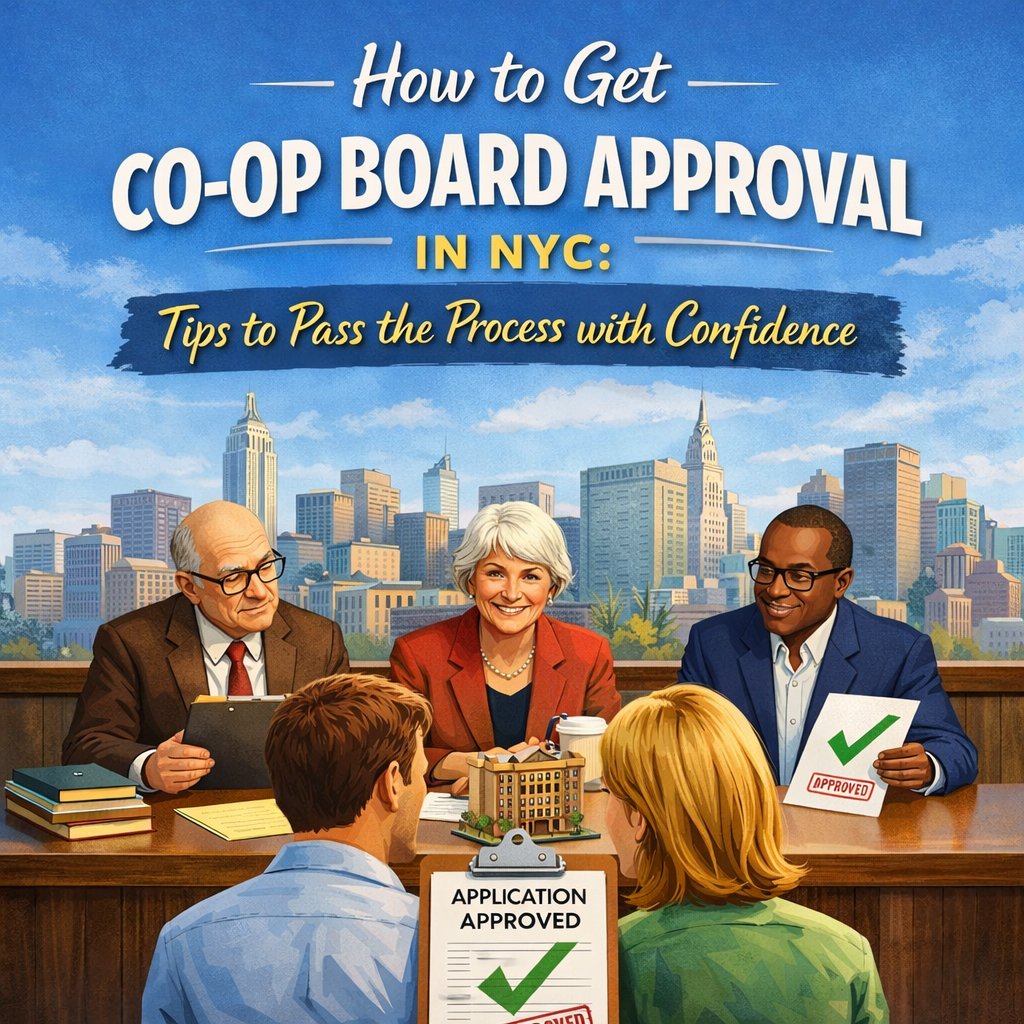
Worried about getting through a co-op board interview in Manhattan?
You’re not alone — even financially qualified buyers can feel uneasy about the board approval process. Co-op boards in NYC are known for being strict, private, and sometimes unpredictable. But with the right preparation, you can pass with confidence.
This guide walks you through the key steps and insider tips to help you succeed.
Understand the Role of the Co-op Board
When you buy a co-op, you’re purchasing shares in a corporation that owns the building. The board has a legal and fiduciary duty to act in the best interest of that corporation — and by extension, the other shareholders (your future neighbors).
So, their primary concern isn’t just your financial profile — it’s how you’ll affect the building’s overall stability and quality of life.
Boards are looking for buyers who are:
- Financially solid (with a strong debt-to-income ratio)
- Respectful of house rules
- Likely to maintain peace and quiet
- Low risk in terms of resale or rental intentions
Even if you’re overqualified financially, things like attitude, lifestyle hints, or renovation plans can impact their decision.
Nail Your Board Package First
Your board package is like your resume — and it needs to be clean, complete, and compelling.
A strong board package typically includes:
- Two years of tax returns
- Bank statements and investment summaries
- Employment verification and salary details
- Personal and professional reference letters
- A cover letter explaining why you want to live in the building
Be sure your financials match across documents. If you claim $200,000 in income but your tax return shows $170,000, expect questions. Consistency is key.
Pro tip: Don’t just submit the minimum. Go the extra mile with polished reference letters and a clear, respectful tone in your introduction.
Prepare for the Interview — and Keep It Boring
If the board package is your resume, the interview is your personality check.
This is not the time to pitch yourself as bold or visionary. Instead, focus on being courteous, professional, and low-maintenance. Think of it like applying to join a quiet book club — not Shark Tank.
Do:
- Dress neatly and professionally
- Be punctual and polite
- Emphasize your appreciation for the building and community
Don’t:
- Talk about plans to renovate right away
- Ask about renting your unit in the future
- Complain about the application process
The less friction you present, the better. Boards want buyers who blend in, not shake things up.
Common Pitfalls That Can Lead to Rejection
Even strong candidates can hit snags if they overlook the details. Some common red flags include:
- Inconsistent financials: Gaps between your stated income and your tax returns
- Weak liquidity: Boards often want to see 1–2 years of mortgage and maintenance costs in post-closing liquid assets
- Reference letters that feel generic or recycled
- Overconfidence or arrogance in the interview
Rejection doesn’t legally require an explanation — so it’s best to avoid any possible missteps from the start.
The Value of Experience: Don’t Go It Alone
Every co-op building is a little different, and each board has its own quirks. That’s why working with an experienced NYC real estate advisor can make all the difference.
I’ve helped many buyers across Manhattan assemble their board packages, prep for interviews, and understand the unspoken expectations that can make or break an approval.
With the right prep, this doesn’t have to be scary — it can actually be a smooth, respectful process that ends in a “yes.”
Have questions about co-op board approval or the NYC buying process in general? I’m happy to answer — no pressure, no obligations.