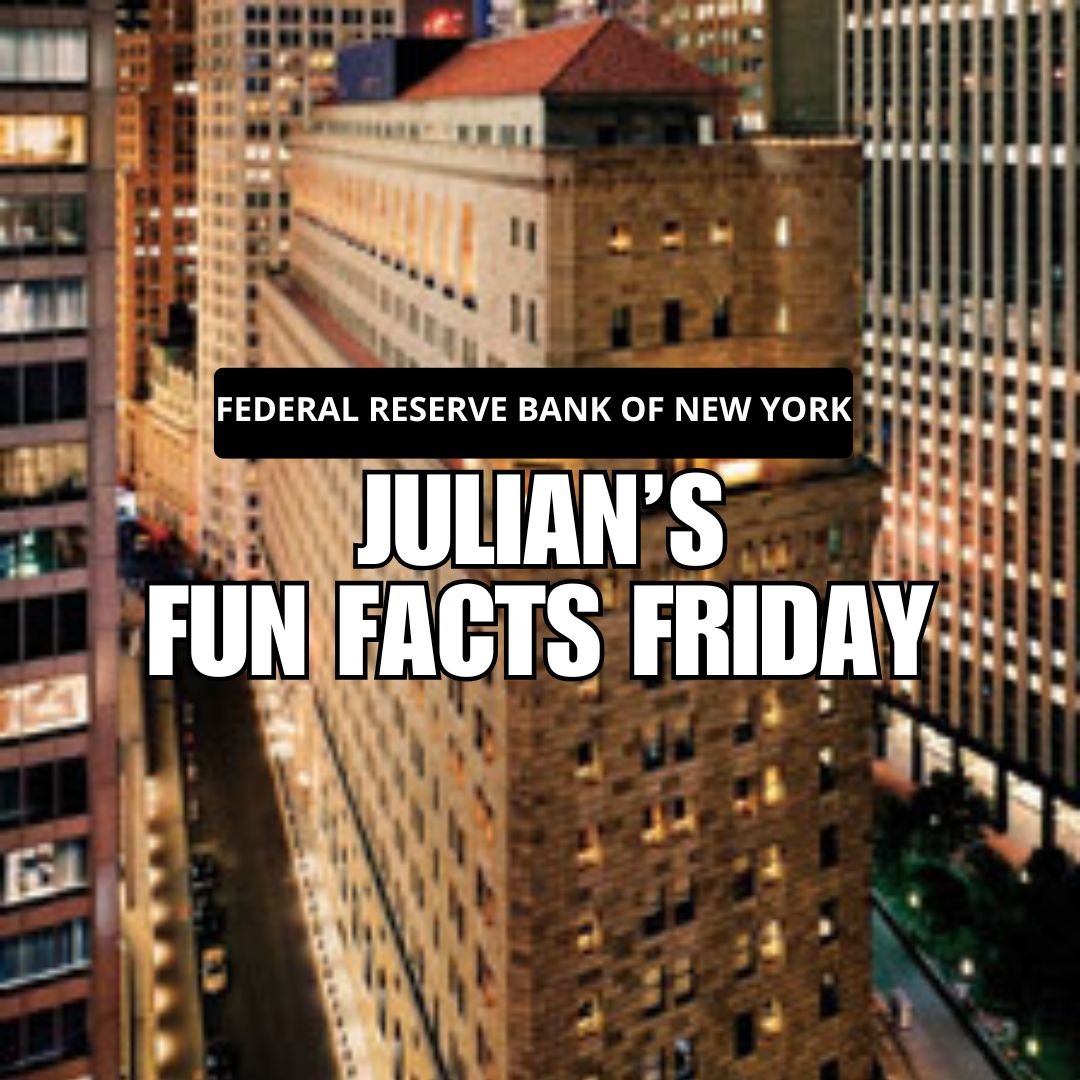
Did You Know one of the most powerful financial buildings in the world looks more like an Italian Renaissance palace than a bank?
The Federal Reserve Bank of New York at 33 Liberty Street is a neo-Renaissance landmark at the heart of U.S. monetary operations. After the Federal Reserve Act of 1913 reshaped the nation’s banking system, architects York and Sawyer won a design competition and began construction in 1919. By 1924, the massive structure was complete, built to project strength and stability in the uncertain years following World War I. An eastern annex was added in 1935 to support the Fed’s expanding role.
Its design was intentional. Modeled after Florentine palaces like Palazzo Strozzi, the building uses heavy stonework and fortress-like proportions to inspire public trust. The 14-story tower sits atop five underground levels, wrapped in a striking limestone and sandstone facade. Look closely and you’ll spot over 200 tons of ornate ironwork by master craftsman Samuel Yellin, featuring animals, dragons, giraffes, and even whimsical faces that feel surprisingly modern.
Here’s where it gets wild: 80 feet below street level, and 50 feet below sea level, lies the famous gold vault. It holds roughly 7,000 tons of gold, making it the largest gold repository in the world. Not a single bar inside is 100% pure—pure gold is too soft to stack safely.
Declared a New York City Landmark in 1966 and added to the National Register of Historic Places in 1980, this building quietly proves that even money needs good architecture—and a little personality.