You may have seen the headlines lately about mortgage debt in America hitting a record high. And maybe someone at dinner brought it up like the New York apartment market is about to collapse overnight.
Here’s the thing: the headline isn’t wrong. But it’s missing the bigger picture. And when you look at the full story, the market today looks very different from what many people fear.
For New York apartment owners and buyers, context matters more than ever.
The Big Number Sounds Alarming — Until You Look Closer
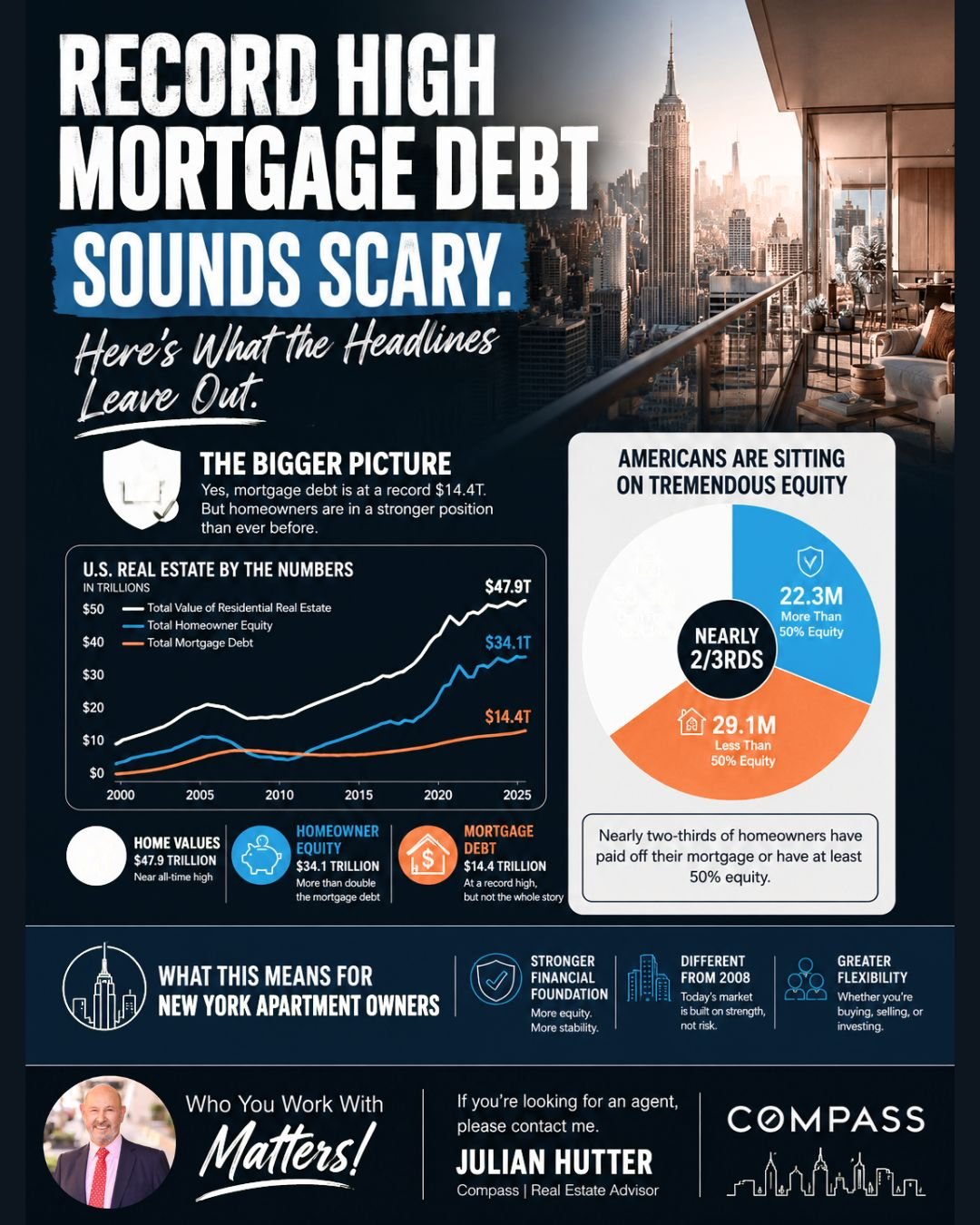
According to the Federal Reserve, mortgage debt in the United States has climbed to roughly $14 trillion, the highest level on record. On the surface, that can sound concerning, especially when combined with stories about inflation, interest rates, and affordability challenges.
But debt alone never tells the full story.
At the same time mortgage debt has increased, the overall value of residential real estate and homeowner equity has grown dramatically as well. In fact, Americans are currently sitting on record levels of equity.
Today, the total value of residential real estate in the U.S. is approximately $47.9 trillion, while total homeowner equity stands near $34.1 trillion — more than double the amount of mortgage debt.
That distinction is critical.
Back during the 2008 housing crisis, many property owners owed more than their apartments or homes were worth. Equity disappeared, and that lack of financial cushion created widespread instability.
That’s not the environment we’re seeing today.
Instead, apartment owners across New York and the country have built substantial equity over the past several years, creating a much stronger financial foundation overall.
Why This Matters for New York Apartment Owners
New York real estate has always been driven by long-term ownership, limited inventory, and strong demand. Many apartment owners throughout Manhattan, Brooklyn, Queens, and surrounding neighborhoods have benefited from years of appreciation and equity growth.
Even with higher interest rates, a large percentage of owners are not overleveraged. Many have either locked in historically low mortgage rates, built meaningful equity positions, or own their apartments outright.
That creates a far more stable market than the headlines often suggest.
For sellers, strong equity positions can provide flexibility when making a move. For buyers, it means today’s market is not being fueled by the same risky lending practices that contributed to the crash in 2008.
Americans Are Sitting on Tremendous Equity
Recent housing data also paints a very clear picture of homeowner strength nationwide.
Nearly two-thirds of homeowners either:
- Own their properties free and clear with no mortgage at all, or
- Have at least 50% equity in their property
That’s an incredibly important statistic because it shows most owners are in stable financial positions, even in today’s higher-rate environment.
The remaining owners with lower equity positions are not automatically distressed either. Many simply purchased more recently and are still building equity naturally over time.
This is not a market standing on weak footing. It’s a market supported by significant ownership strength and long-term wealth accumulation.
What This Means If You’re Buying or Selling in New York
If you’re thinking about buying an apartment in New York, this data reinforces something many experienced agents already know: today’s market dynamics are fundamentally different from the housing crisis years.
And if you’re considering selling, understanding your equity position and local market opportunities could open doors you may not have considered.
In a market as competitive and nuanced as New York, having the right guidance matters just as much as timing.
Who You Work With Matters!
If you’re looking for a trusted New York real estate advisor to help you navigate the market, whether you’re buying, selling, investing, or simply exploring your options, I’d be happy to help.
Julian Hutter
Compass | Real Estate Advisor
Feel free to reach out anytime for a conversation about your goals and what’s happening in today’s New York apartment market.