Buying a co-op in Manhattan can feel intimidating, especially if you've never been through the process before. Between financial requirements, board packages, interviews, and approvals, there are more moving parts than in a typical real estate transaction.
The good news is that once you understand the process, it's very manageable.
As a Manhattan real estate advisor who has helped buyers navigate the co-op buying process for many years, I've found that most concerns disappear once buyers understand what to expect and how the process works.
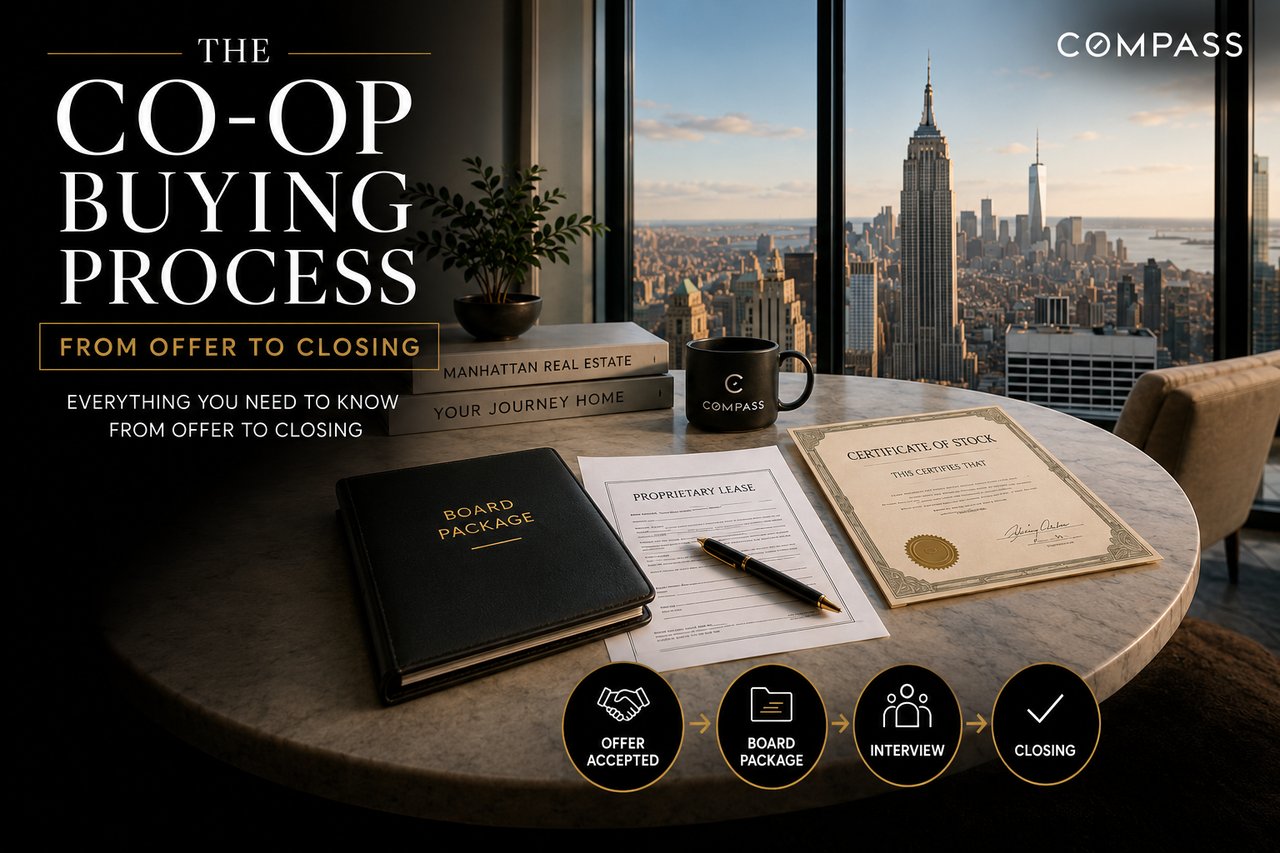
Here's what every buyer should know about buying a co-op in NYC, from accepted offer to closing.
Step 1: Do You Qualify? (This Comes Before Everything)
Before you fall in love with a particular apartment, you need to know whether you meet the building's financial requirements.
Every co-op has its own standards.
In many ways, co-ops are a lot like people. Every building has its own personality, rules, culture, and financial requirements. While most share similar characteristics, the details can vary significantly from one building to another.
Most co-ops require at least a 20% down payment. Many require more. Some luxury buildings require substantially larger down payments, and a few are all-cash purchases.
Beyond the down payment, co-op boards typically evaluate:
Debt-to-Income Ratio
Most buildings want to see a manageable debt-to-income ratio after your monthly maintenance and housing expenses are factored into the calculation.
Post-Closing Liquidity
This is one of the most important—and often most overlooked—parts of buying a co-op apartment in New York City.
Many co-op boards want to see that buyers will still have substantial liquid assets after closing. These reserves demonstrate that you can comfortably handle future housing expenses and unexpected events.
While this requirement may sound intimidating, many buyers are surprised to learn they already meet these standards once all of their assets are properly documented.
Employment and Income Stability
Whether you're salaried, self-employed, retired, or living off investments, the board wants to see consistency and financial stability.
Credit Profile
Boards review more than just a credit score. They want to understand your overall financial history and level of financial responsibility.
The bottom line: know your numbers before you make an offer.
This is one of the first conversations I have with every buyer because it can save a tremendous amount of time, frustration, and disappointment later in the process.
Step 2: Offer Accepted—Now the Real Work Begins
Once your offer is accepted, your attorney becomes a critical part of the transaction.
This isn't simply paperwork.
Your attorney is protecting you by reviewing both the apartment and the building itself.
Reviewing the Co-op's Financial Health
The building's financial health eventually becomes your financial health as a shareholder.
Your attorney will review:
- Audited financial statements
- Reserve funds
- The underlying mortgage
- Pending assessments
- Building budgets
- Financial trends
A building with weak financials can create future challenges for owners and may impact resale value.
Reviewing the Board Minutes
Board minutes are often one of the most valuable documents in the entire transaction.
They frequently reveal information that never appears in a listing description, including:
- Major repair projects
- Elevator replacements
- Roof work
- Resident disputes
- Policy changes
- Litigation
- Capital improvements
A thorough review of board minutes can provide tremendous insight into the building you're about to call home.
Never skip this step.
Step 3: Building Your Co-op Board Package
The NYC co-op board package is often where buyers become nervous.
It shouldn't be.
This is the heart of the Manhattan co-op board approval process, but it becomes much easier when handled one section at a time.
I often encourage my clients to think of the board package as their financial autobiography. The goal is to present a complete, accurate, and organized picture of who you are financially and personally.
A typical co-op board package includes:
- Tax returns
- W-2s or 1099s
- Bank statements
- Brokerage statements
- Retirement account statements
- Personal financial statement
- Employment verification
- CPA letters when necessary
- Personal reference letters
- Professional reference letters
- Purchase application
- Signed contract of sale
Some buildings request additional documentation, and some boards ask follow-up questions.
The key is preparation, organization, and attention to detail.
A complete and professionally assembled package creates confidence before the board ever meets you.
Step 4: The Board Review
After submission, the board reviews your package.
The timeline varies by building, but most boards complete their review within several weeks.
The board is evaluating:
- Financial stability
- Overall qualifications
- References
- Long-term suitability for the building
This is often the stage where buyers feel they have lost control of the process.
The truth is that the best thing you can do at this point is submit a thorough, well-prepared package and allow the process to unfold.
Step 5: The Co-op Board Interview
If your package is approved, you'll be invited to a co-op board interview.
Despite their reputation, most interviews are straightforward.
The board is not trying to trick you.
They simply want to meet the person behind the paperwork.
Before the interview:
- Understand the building's policies
- Review your financial information
- Know the rules regarding pets, renovations, and subletting
- Dress professionally
- Arrive on time
Most importantly, be yourself.
Boards are not looking for perfection.
They're looking for responsible neighbors who will be a positive addition to the building community.
Keep your answers concise, be genuine, and avoid oversharing.
Step 6: Approval and Closing
Once you receive board approval, your attorney coordinates the closing with the seller's attorney, managing agent, lender, and all parties involved.
Unlike a condominium purchase, you're not receiving a deed.
Instead, you'll receive:
Proprietary Lease
This document gives you the right to occupy the apartment.
Stock Certificate
This document represents your ownership interest in the cooperative corporation.
Together, these documents establish your ownership rights in the building.
The Process Takes Time—And That's Okay
A Manhattan co-op purchase typically takes several months from accepted offer to closing.
That timeline exists for a reason.
Every step is designed to protect both buyers and the building.
Buying a co-op in Manhattan doesn't have to be stressful when you understand the process and have the right professionals guiding you.
Whether you're a first-time buyer, relocating to New York City, upsizing, downsizing, or purchasing an investment property, understanding how co-op boards evaluate buyers can make the process significantly smoother.
If you're considering buying a co-op apartment in New York City, I'd be happy to discuss your goals, explain the process, and help you understand where you stand before you ever make an offer.
No pressure. No obligation. Just professional guidance.
Remember—Who You Work With Matters!