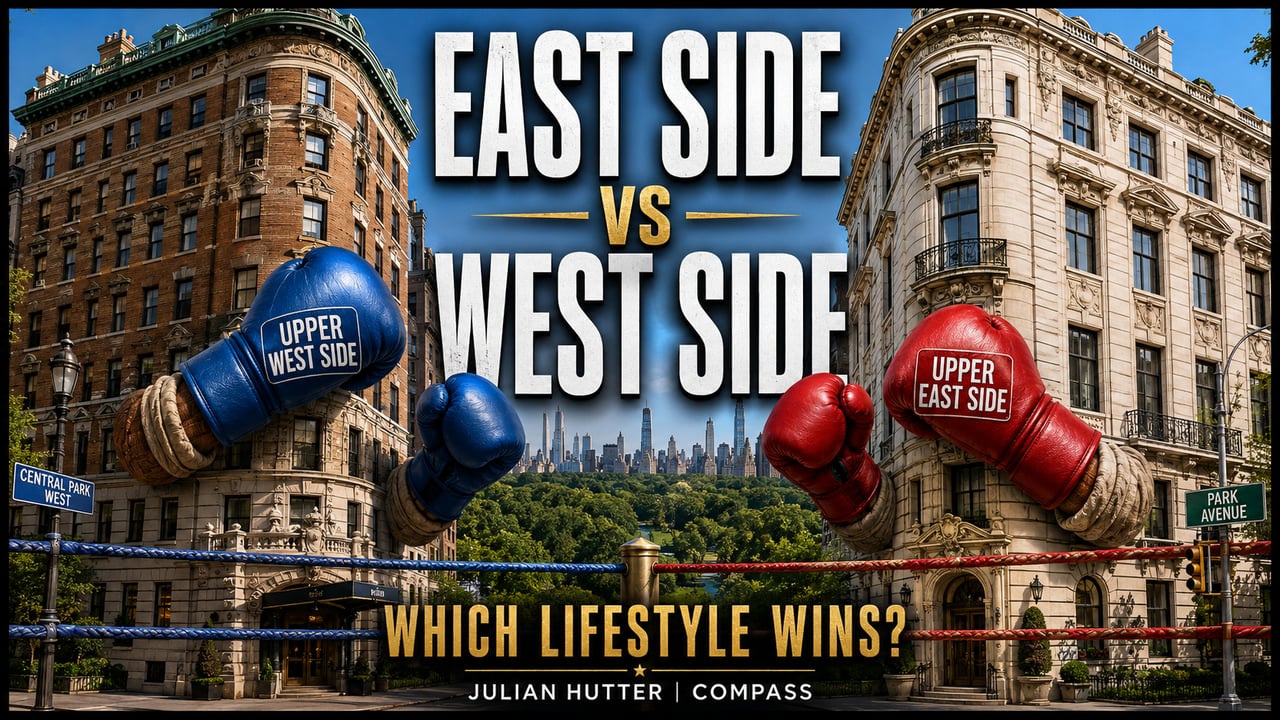
The Upper East Side and Upper West Side sit across Central Park from each other, but living in them can feel surprisingly different. Both offer prewar apartments, cultural institutions, neighborhood restaurants and access to Central Park. The better choice depends on how you commute, spend your free time and what you expect from your apartment.
Transportation: Where Do You Need to Go?
The Upper West Side has two major subway corridors. The 1, 2 and 3 trains run along Broadway, while the A, B and C serve Central Park West. That provides useful options for reaching Times Square, Columbus Circle, Penn Station and Downtown Manhattan.
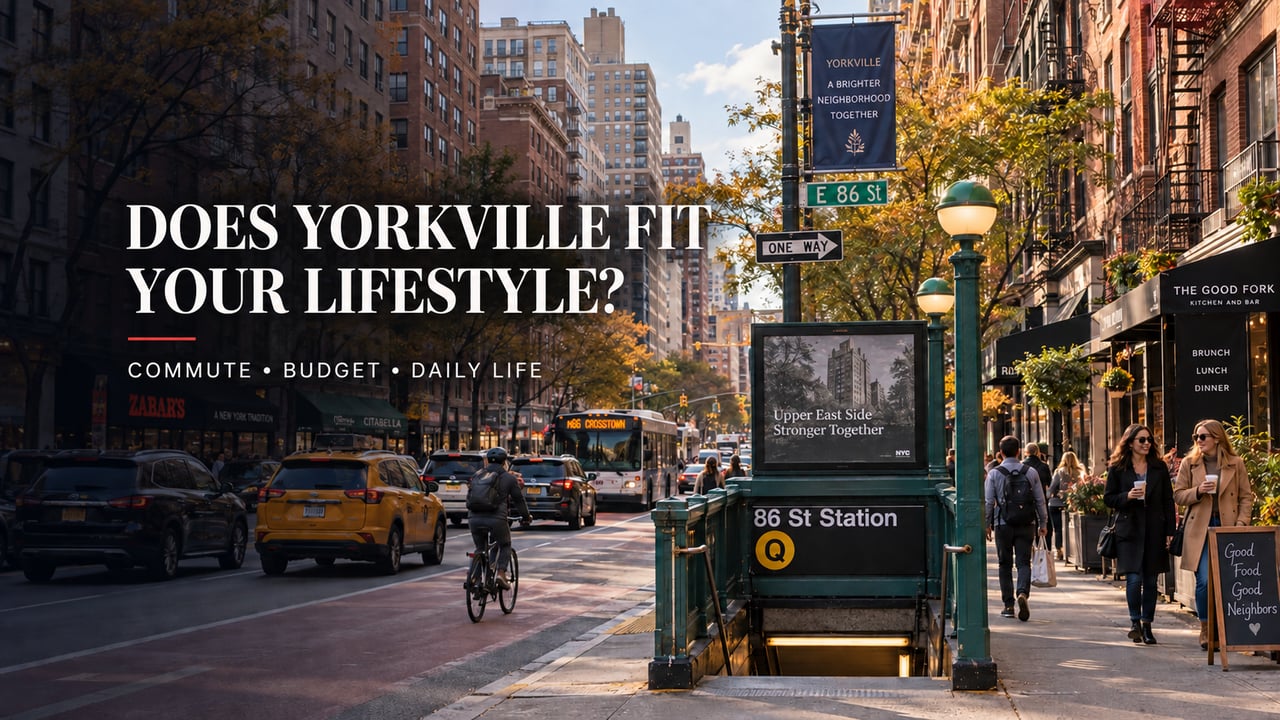
The Upper East Side relies on the 4, 5 and 6 along Lexington Avenue and the Q along Second Avenue. The Lexington line is particularly convenient for Grand Central, Midtown East and Lower Manhattan. The Q significantly improved transportation for Yorkville and the eastern Upper East Side.
Crosstown travel remains less convenient on both sides. Buses across 72nd, 79th, 86th and 96th Streets help, but crossing Central Park can still take longer than the map suggests. In Manhattan, several blocks can occasionally develop their own time zone.
Parks and Outdoor Space
Both neighborhoods border Central Park, but the Upper West Side also has Riverside Park and the Hudson River Greenway. That gives residents waterfront paths, athletic fields and long routes for walking, running or cycling.
The Upper East Side offers Central Park, Carl Schurz Park, the East River Esplanade and Asphalt Green. Carl Schurz Park feels smaller and more local, with waterfront paths, dog runs and East River views.
For sheer variety of outdoor space, the Upper West Side has the advantage. For a quieter neighborhood park experience, Carl Schurz Park is difficult to beat.
Restaurants and Everyday Convenience
Upper West Side restaurant life is concentrated along Amsterdam Avenue, Columbus Avenue and Broadway. The neighborhood offers established restaurants, cafés, bakeries and casual places that become part of residents’ weekly routines. Lincoln Square adds polished dining and cultural activity.
The Upper East Side changes as you move east. Madison Avenue is more formal, while Second and First Avenues offer a broad mix of neighborhood restaurants, bars, cafés and everyday services. Yorkville has become livelier without losing its residential character.
The Upper West Side feels more consistently neighborhood-oriented. The Upper East Side offers greater variation from block to block.
Private Schools and Universities
Both sides have numerous independent schools, but living nearby does not guarantee admission. The Upper East Side includes schools such as Brearley, Browning, Chapin, Dalton, Hewitt and Spence. It is also home to Hunter College, Weill Cornell Medicine and Rockefeller University.
The Upper West Side includes Trinity, Collegiate, Dwight, Calhoun and Trevor Day. Higher-education and cultural institutions include Fordham’s Lincoln Center campus and Juilliard, while Columbia University, Barnard College and the Jewish Theological Seminary are located farther north in Morningside Heights.
For households connected to one of these institutions, the daily commute may matter more than whether an apartment is technically east or west of Central Park.
Hospitals and Medical Care
The Upper East Side has one of Manhattan’s most concentrated medical corridors. NewYork-Presbyterian/Weill Cornell Medical Center, Hospital for Special Surgery, Memorial Sloan Kettering Cancer Center and Rockefeller University are clustered around York Avenue. Mount Sinai Hospital is near the neighborhood’s northern end at Madison Avenue and 100th Street.
The West Side has Mount Sinai West near West 59th Street and Mount Sinai Morningside around West 114th Street. Farther uptown, NewYork-Presbyterian/Columbia University Irving Medical Center—still commonly called Columbia Presbyterian—is a major academic medical center at West 168th Street in Washington Heights.
Columbia Presbyterian is not technically on the Upper West Side, but it is an important part of the broader West Side medical corridor and should be considered by anyone who receives regular care there.
Both sides provide access to major healthcare institutions. The Upper East Side has the advantage of several nationally recognized hospitals concentrated within a relatively small area, while the West Side’s major medical centers are spread from West 59th Street through Washington Heights.
Apartment Value, Co-ops and Condos
Current 2026 market trackers place typical Upper East Side sales slightly below Upper West Side levels, although results vary considerably by building, condition and location.
The Upper East Side generally offers more inventory and a wider range of prices. Buyers may find better relative value in postwar co-ops east of Lexington Avenue, particularly in Lenox Hill and Yorkville. The neighborhood also has a substantial selection of condominiums and newer developments along Second and Third Avenues.
Both sides contain exceptional prewar co-ops. On the Upper East Side, Fifth Avenue, Park Avenue and Carnegie Hill are known for formal layouts, large rooms and often-demanding co-op boards.
On the Upper West Side, Central Park West, Riverside Drive and West End Avenue offer grand prewar buildings with distinctive architecture and spacious floor plans. These apartments frequently command a premium for their architecture and proximity to both Central Park and Riverside Park.
Condo inventory exists on both sides. The Upper East Side provides a broader range of newer developments, while Upper West Side condominiums around Broadway, Lincoln Square and Riverside Boulevard can be tightly held and command premium prices.
Everyday Street Life
The Upper West Side feels visually cohesive. Broadway is busy, while Amsterdam and Columbus provide restaurants, shops and active sidewalks. Brownstones and prewar buildings contribute to a recognizable neighborhood identity.
The Upper East Side is more varied. Fifth and Madison feel polished, Park Avenue feels established, and First and Second Avenues feel more casual. Buyers can choose among several different lifestyles without leaving the neighborhood.
Which Side Is Better?
Choose the Upper West Side if you prioritize multiple subway lines, Riverside Park, prewar architecture and a strong neighborhood rhythm.
Choose the Upper East Side if you prioritize apartment selection, relative value, Midtown East access and proximity to major medical institutions.
There is no universal winner. The better Manhattan lifestyle is the one that works with your daily routine—and fits your budget after maintenance, common charges and renovation costs are considered.
I’m Julian Hutter, a Compass Associate Broker and Manhattan real estate advisor. If you are deciding between an Upper East Side or Upper West Side apartment, I can help you compare the buildings, costs and tradeoffs.
Remember—Who You Work With Matters!